
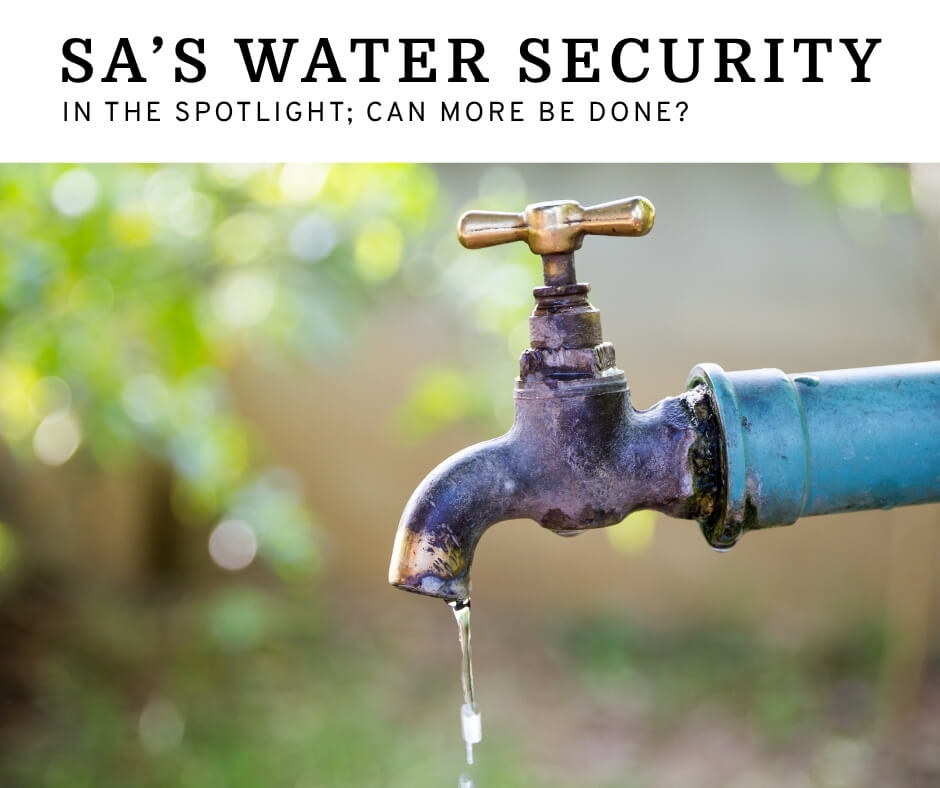
South Africa’s water security is under intense scrutiny during National Water Month, as communities face growing challenges in accessing clean, reliable water.
March marks both Human Rights Day and National Water Month in South Africa – a time dedicated to raising awareness around water conservation, infrastructure development, and the protection of scarce water resources. However, in 2026, the observance comes amid a worsening national water crisis, officially declared in February.
While the initiative aims to mobilise citizens and government alike, the reality for many South Africans – particularly in agricultural towns – is that access to safe, reliable water remains uncertain.
“The irony is that water is a human right, but it is not a reality for many citizens in South Africa’s agri-centric towns,” says Roelie van Reenen, Supply Chain Executive at Beefmaster Group.
Operating in regions such as Kimberley in the Northern Cape and Christiana in the North West, the company has witnessed firsthand the ongoing struggles with water quality and supply.
“We want to see real commitment to improving access to clean water, with communities playing a leading role in securing this fundamental right,” he adds.
Government Response to South Africa’s Water Crisis
Mounting pressure on failing water systems has led to national intervention. In February 2026, the government established a National Water Crisis Committee, tasked with:
- Driving urgent reforms in the water sector
- Deploying technical expertise to struggling municipalities
- Coordinating national resources to accelerate recovery
While the move has been welcomed, concerns remain about whether it will deliver results quickly enough. Water security has already become a major issue in Gauteng, where recurring water shortages and power outages continue to disrupt daily life and economic activity. Van Reenen believes stronger public pressure is needed to drive change.
“Dysfunctional wastewater treatment works, mismanagement, underinvestment, and a lack of skills are at the heart of unsafe water. This is a severe issue that should enrage the public.”
He stresses that accountability must be central to any solution:
“Individuals within failing systems should be held responsible when lives are impacted due to inadequate water supply – especially where there has been prolonged inaction.”
Alarming Water Quality and Infrastructure Decline
Recent national reports paint a concerning picture of South Africa’s water systems.
The latest Blue Drop, Green Drop, and No Drop reports reveal significant deterioration:
- Northern Cape: 87% of drinking water systems rated poor or critical (up from 48% in 2014)
- Free State: Increased from 31% to 59% poor/critical systems
- North West: Ongoing widespread system failures
More broadly:
- 13% of South Africa’s water is unsafe to drink (as of 2024)
- 47% of treated water is lost due to leaks, theft, and infrastructure failure
- High-risk provinces include Free State, Limpopo, Mpumalanga, Eastern Cape, and Northern Cape
Although many urban areas still meet minimum drinking standards, the margin for safety is shrinking rapidly.
Water Security in South Africa: A Call to Action
Experts warn that the current data should serve as a national wake-up call.
“The reports give us a clear indication of the severity of the crisis,” says van Reenen. “But it’s concerning that these findings haven’t triggered a stronger public response.”
He emphasises that meaningful change requires collective action:
- Community-led water conservation initiatives
- Public pressure for improved governance
- Support for infrastructure investment
- Advocacy for policy reform and accountability
“Greater awareness, stronger accountability, and urgent action are essential if we are to safeguard South Africa’s water future,” he concludes.